
PWM Perspectives provides valuable insights into market dynamics, investment opportunities through Q Wealth, and key financial indicators. We are committed to keeping you informed with timely updates from PWM Private Wealth Counsel and Q Wealth Partners, our partner portfolio management firm.
Happy New Year! If you’re reviewing the financial plan your PWM Team drafted for you (maybe both the 2025 & 2026-line items and rows!) and your personal return targets, let's take a moment to reflect on a key principle of successful long-term investing and how it applies to your financial picture: the power of diversification through thoughtful asset allocation.
Numerous studies, including the landmark Brinson, Hood & Beebower research (it was titled “Determinants of Portfolio Performance” and though it’s very academic, it’s worth the read!), have shown that over 90% of a portfolio’s long-term return variability comes from asset allocation decisions; not market timing or individual security selection. In other words, the mix of equities, fixed income, alternatives, and other asset classes matters far more than trying to predict the next top-performing stock.
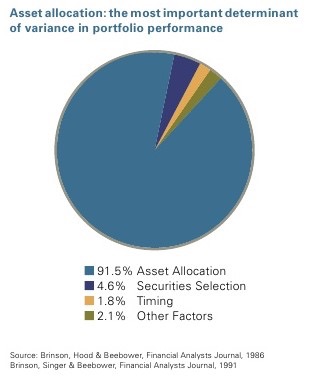
As we start a new year, it’s an important reminder: markets are unpredictable from year to year. Some asset classes soar while others lag, and the order changes constantly. A well-diversified portfolio increases the likelihood of holding at least some winners each year while reducing the risk of being overly exposed to the laggards.
Below you’ll see a chart we use in many client meetings. The chart below illustrates the historical annualized returns of major asset classes on a calendar-year basis. Notice the “quilt” effect. (We know, not the prettiest of blankets.)
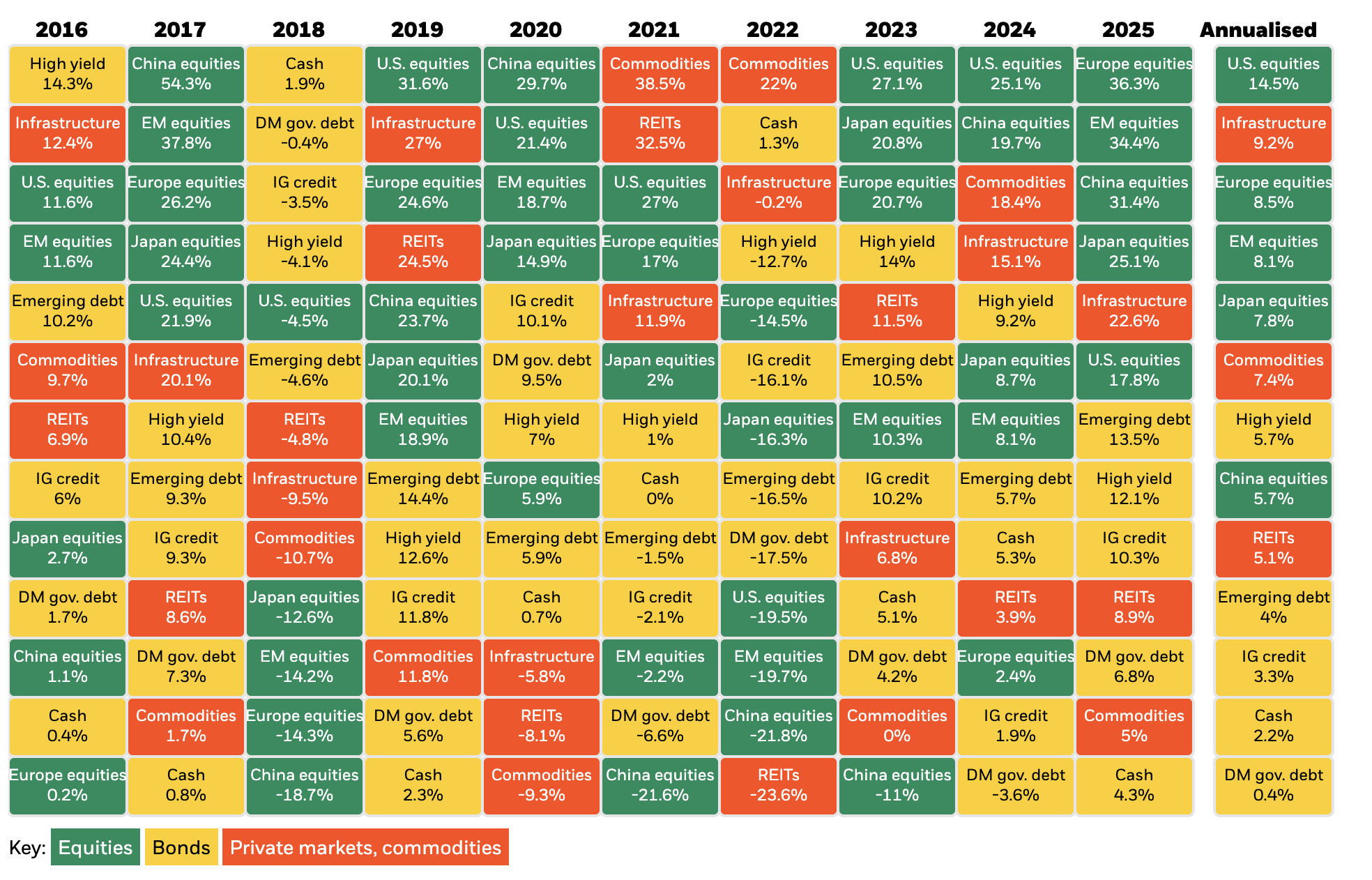
(Source: https://www.blackrock.com/corporate/insights/blackrock-investment-institute/interactive-charts/return-map Past performance is not a reliable indicator of current or future results. It is not possible to invest directly in an index.Sources: BlackRock Investment Institute, with data from LSEG Datastream, December 2025.Notes: The table shows annual index total returns (income or dividends reinvested) in U.S. dollars, indices are unmanaged and therefore not subject to fees. 2025 shows year to 28 November 2025. Annualised column shows the annualised total return over the last 10-years from the same date. Indexes or prices used are: U.S. equities - MSCI USA Index, EM equities - MSCI Emerging Markets Index, Europe equities - MSCI Europe Index, Japan equities - MSCI Japan Index, China equities - MSCI China Index, DM gov. debt - Bloomberg Barclays Global Treasury Index, Emerging debt - JP Morgan Emerging Market Bond Index (EMBI) Global Composite, High yield - Bloomberg Barclays Global High Yield Index, IG credit - Barclays Global Corporate Credit Index, Commodities - Commodity Research Bureau (CRB) Index, Cash - Bloomberg Barclays U.S. Treasury Bill Index, REITs - S&P Global Real Estate Investment Trust (REIT) Index, Infrastructure - S&P Global Infrastructure Index.)
We always like to ask clients to look for “US Equities” in 2022 versus 2023 – that’s a “fun” swing year to year. Commodities were the worst-performing asset class in 2015 and 2020, then surged to the top in 2021 and 2022, only to fall back near the bottom in 2023.
Similar patterns appear across equities, bonds, and alternatives. This unpredictability underscores why asset allocation and correlation management, not chasing last year’s winners, are essential for long-term success.
Even within asset classes, such as equities/stocks, we need to think about diversification. The chart below highlights the wide gap between the best and worst performers in the S&P 500 just last year.
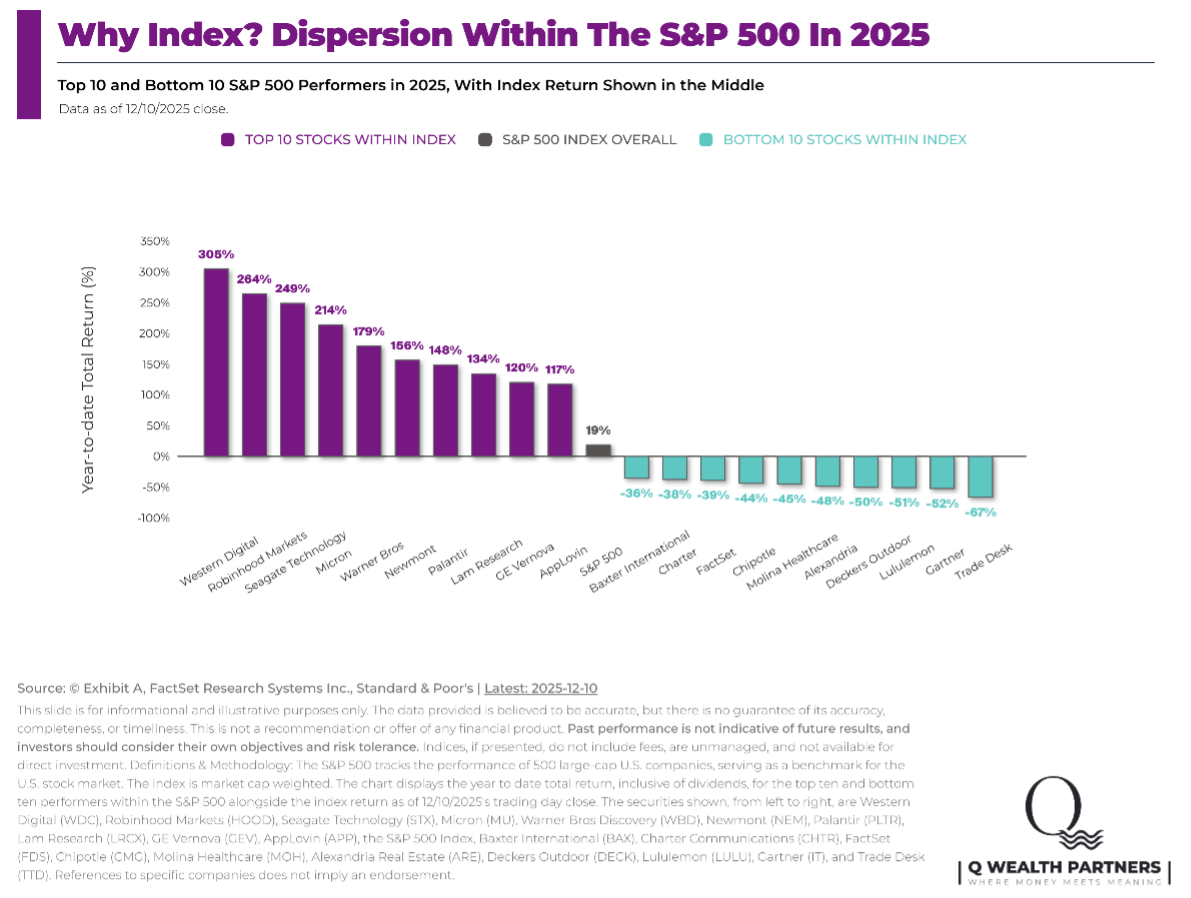
While standout winners grab headlines, predicting them in advance is nearly impossible. The index returns sit between extremes, reflecting the combined effect of outperformers and underperformers. This is why broad index exposure and disciplined allocation help manage risk and capture overall market growth, rather than relying on any single stock.
The Q Wealth Partners approach to building investment portfolios in 2026 remains steadfast. Focused on maintaining a well-balanced mix of equities, fixed income, and alternative investments, selected core holdings are low-cost, globally diversified index funds, which complement active strategies when suitable. Portfolios are regularly rebalanced to ensure they stay aligned with each client's financial goals, plans, and risk profile.
Upcoming Events:

Life After Harvest: Farmland Prices & Your Wealth Plan (Presented by PWM Private Wealth Counsel)
If you’re considering a sale, leasing, or a transition to the next generation for your farmland, this conversation is designed to bring perspective and practical insight. We will discuss how financial planning, investment considerations, estate structures, and today’s farmland values intersect, and what that means for your family over the long term.
Join us for this FREE Seminar and hear from a team of professionals dedicated to the farming industry. You will learn:
- How to understand farmland values, trends, and risks.
- What to consider before selling, leasing, or transitioning your farmland.
- Why a clear financial plan matters for securing farm legacy and living a fulfilling life.
- How to invest your wealth and take a "personal pension" approach with your hard-earned dollars.
Event Details:
- Friday March 6th (4:00 – 6:00 pm) – Prince Albert, SK
- Saturday March 7th (9:30 am – 12:00 pm) – Saskatoon, SK
Register below for your preferred location:
Alternatively, you can also register using the options below.
Limited Seats Available!
📞 By Phone: 306-975-9500
📧 By Email: info@pwmprivate.com
We look forward to seeing you there!