
Recognizing the Need and Instituting Governance in a Family Enterprise
When it comes to wealth transfer, a few statistics can be used to reflect the challenges of preserving family enterprise wealth and maintaining a successful business across generations:
- 70/30/10 indicates that 70% of wealth is lost by the second generation, 30% of the remainder by the third generation and 10% of the remainder by the fourth.
- 70/90/10 denotes that 70% of family businesses fail in the second generation, increasing to 90% by the third. What does 10% represent? Only 10% of current business owners believe the next generation is prepared and capable of leading the family business today.
Governance
The purpose of governance is to promote effective communication and intentional decision-making.
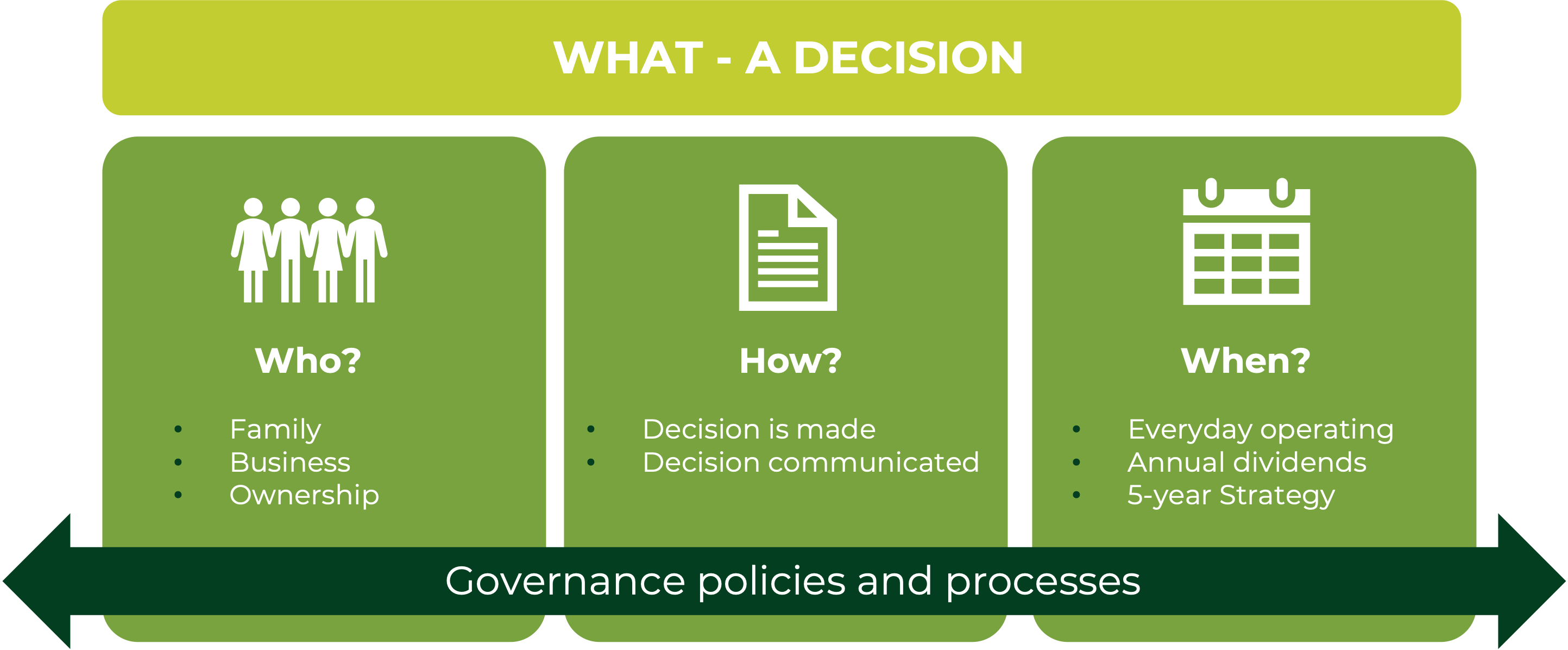
While decision-making often starts informally – gut feel or intuition - with the founding generation of a family business, it becomes necessary to establish and maintain processes, policies, and structures to support effective communication and intentional decision-making as the enterprise and the family grows. Without governance, how are decisions made, by whom, and when? Governance ensures that the right people are engaged, have all the relevant information, and are ready to make an intentional decision in a timely fashion.
Establishing and implementing governance is more of an art than a science. It should facilitate communication and decision-making, not create roadblocks, compromise privacy, nor be perceived as judgement or threaten control over the Family, Business and Ownership components of a family enterprise.
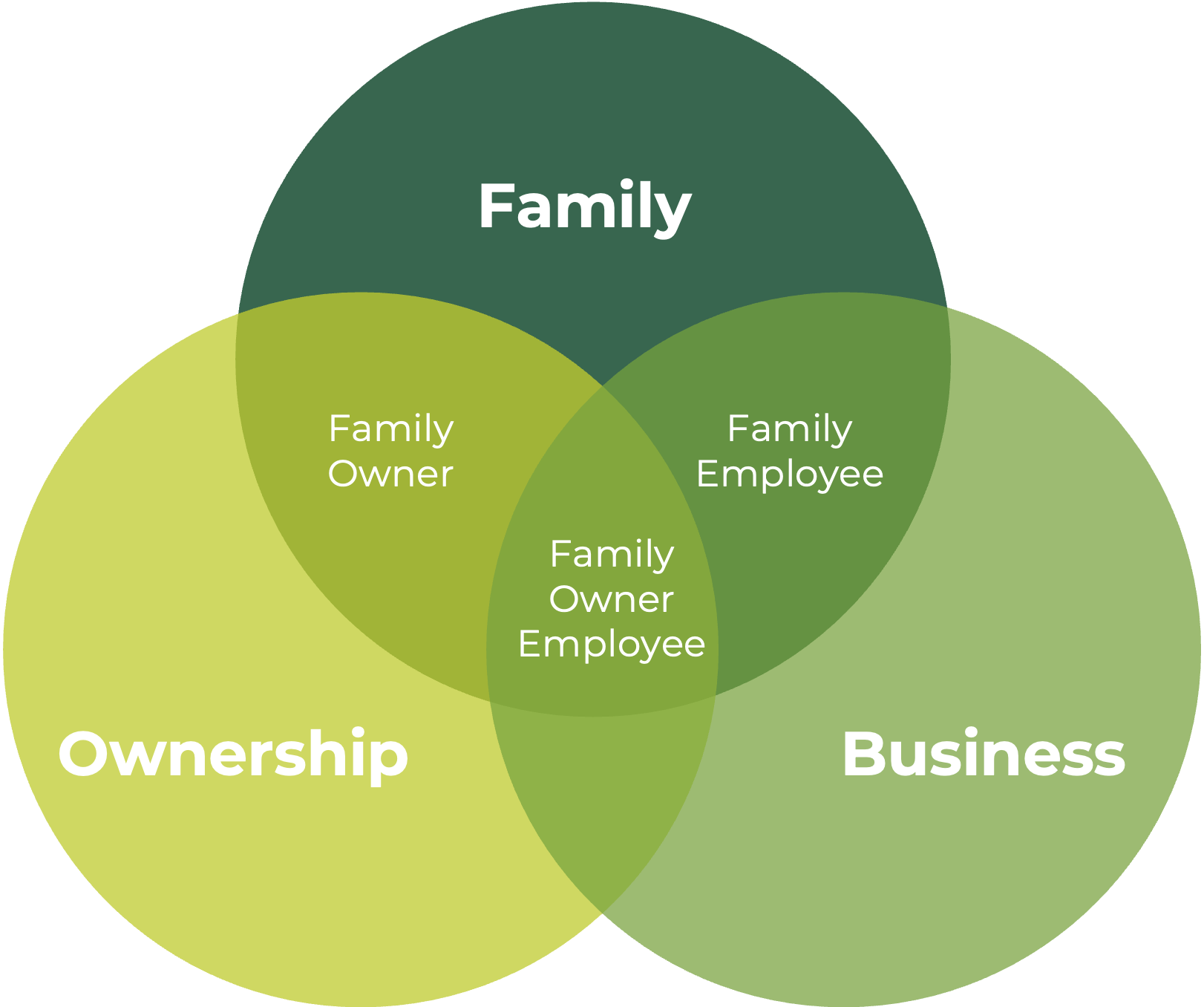
Implementing Governance in the Three Circle Model
The Three Circle Model 1 helps to identify governance goals, policies, and structures of a family enterprise system, and its three components: Family; Business; and Ownership. Governance creates accountability and alignment of interests within each of the three components, and the family enterprise. Here are typical governance goals, structures, and policies for each component:
Family
Goals: Strengthen family cohesion and relationships, manage conflict, maintain trust, support family identity amongst those not involved in the business or owners, and offer early opportunities for the next generation.
Structures: Family meetings, councils, conferences or foundations – structures that serve as decision making-bodies for the family, develop communication policies and opportunities for experience or education in the family enterprise.
Policies: Define who is considered “family,” determine meeting agendas and establish communication practices.
Business
Goals: Fiduciary oversight of the business, including representing the needs of owners, executing strategic direction, selecting and appraising senior executives. Expansion, growth and profit of the family enterprise.
Structures: Board of Directors, Advisory Board, and Investment Committee - structures to ensure a long-term, intergenerational perspective, consideration for appropriate growth, risk and stability, mentorship for next generations, and neutralizing family dynamics where needed.
Policies: Determine board member duration, participation in board committees and the requirement for independent representation from outside the family.
Ownership
Goals: Clarify the role and boundaries of ownership, whether as a steward (wealth is a responsibility) or inheritor (wealth is a gift), and ensure continuity and intergenerational intention of the family enterprise.
Structures: Ownership council or shareholders assembly, with the aim to guide several types of owners (inactive, active, or managing) through successive generations.
Policies: Create a Shareholder Agreement, Ownership Charter or Owners’ Vision.
Benefits of Good Governance
Collectively the family enterprise system is worth greater than the sum of the individual – Family, Ownership and Business - components. Initiating and implementing good governance in a family enterprise promotes clear, open communication, provides processes to address tension and resolve conflicts, advances trust amongst the family, and provides boundaries and goals for intentional decision-making.
Connect with PWM Private Wealth Counsel
A family business, farm or an investment portfolio does not guarantee a great family, but a family can create a great family enterprise. If you are interested in learning more about family enterprises and implementing governance, please reach out to your PWM Private Wealth Counsel Wealth Advisor or your Q Wealth Portfolio Manager.
Disclaimer
Your PWM Private Wealth Counsel Wealth Advisor or your Q Wealth Portfolio Manager is an owner and partner in the Q Wealth Partnership. Portfolio Management services are provided by Q Wealth. Financial planning services are provided by PWM Private Wealth Counsel. This document has been provided for information purposes only and is not intended to be relied upon as investment, financial, tax or legal advice. Please consult an independent legal or tax professional if considering the implementation of a planning strategy. The planning strategies and technical content are provided for the general guidance and benefit of our clients at the time of writing; however, we cannot guarantee the accuracy or completeness of the information contained herein.